Where to stay in London: choose the right neighbourhood
PLAN YOUR VISIT · NEIGHBOURHOOD COMPARISON
The best place to stay in London is the one that fits your actual days. Start with the sights, evening plans and airport journey you care about, then compare the complete hotel location. A familiar neighbourhood name can hide a long walk to the station; a slightly less central base can work well when its connections match your itinerary.
For a first visit with West End evenings
Covent Garden and Seven Dials can suit a theatre-and-central-sightseeing plan. You can connect a daytime walk with an evening performance without making the whole day a sequence of transport changes. Check whether your room faces a busy street or a late-opening venue if quiet is important: being near evening activity and sleeping away from it are different priorities.
Soho and Chinatown make more sense when dining, entertainment and West End streets are part of the appeal. They are not an automatic choice for someone whose main goal is a quiet early night. Compare the actual property rather than assuming every street has the same atmosphere.
For river walks and landmark sightseeing
South Bank and Waterloo offer a useful starting point for a river-led visit. Plot your chosen attractions and the station entrance you would use. A hotel described as being on the South Bank may be some distance from Waterloo, and crossing the river can be part of a day rather than a transport problem to avoid.
For a royal-London day, use the Westminster Abbey guide to choose your main visit and map it against the accommodation. Do not book solely on the promise of being “near Big Ben”: check the walk, accessible route and evening food options at the exact address.
For museums and family pacing
Kensington needs a more precise location choice. High Street Kensington and South Kensington are different starting points. A family concentrating on the Science Museum, Natural History Museum and V&A should compare the full walk to those museums, not just the word Kensington in a listing.
Check sleeping arrangements, lift access, breakfast rules and luggage storage before paying. A family room label does not establish which beds are provided or whether a pushchair can reach the room. Plan one major activity each day and leave room for a nearby meal; a central address does not remove the need for breaks.
For shopping, restaurants and a considered budget
Marylebone can anchor a books, art and shopping itinerary. Knightsbridge or the Bond Street shopping area may fit a more purchase-focused visit. These are choices about the day you want, not proof that every nearby hotel provides a luxury experience.
Compare the total stay cost rather than the first price displayed. Check taxes and fees, cancellation, breakfast and any deposit. A lower room price farther away can be worthwhile if the route suits your plans, but add travel and the time you will spend returning at night. This guide does not promise that a named district is always cheaper.
For rail arrivals and onward journeys
King’s Cross is worth comparing when the railway is central to your trip. For an airport arrival, choose the accommodation and route together: Paddington is the London terminus for Heathrow Express, Victoria is one Gatwick option, and the Thameslink corridor provides other London destinations. The fastest airport-to-station train is not necessarily the simplest hotel journey.
Our London airport comparison links to the individual transfer guides. Check your landing terminal, realistic exit time and the final connection. Do not schedule a prepaid attraction immediately after an uncertain flight arrival.
For a different London base
Shoreditch and Hoxton, the City and Canary Wharf offer distinct east London starting points. Compare your planned evenings and journeys rather than grouping them together as one small area. Business appointments should be checked by address; a Docklands meeting and a City meeting are not interchangeable.
For a slower visit, consider how Greenwich or Richmond would work with your days. An outer base can support a particular neighbourhood experience, but it is not a shortcut to every central attraction. Test several sample journeys for your dates before booking.
A five-minute accommodation checklist
- Map the hotel’s full address against two main activities and one evening plan.
- Check the station entrance, final walk and accessibility, including luggage.
- Compare the arrival and departure airport journeys separately.
- Read the room details, cancellation and full cost directly with the accommodation provider.
- Keep a manageable first day and a realistic last-day luggage plan.
For a wider choice, explore all neighbourhood guides, build a flexible first-time itinerary, or read the accessible London planning checklist. Your best base follows the trip you actually intend to take.
Reviewed 7 October 2026 against Visit London’s accommodation and area information and the LondonFound neighbourhood and airport guides linked above. Comparisons and itinerary choices are LondonFound editorial suggestions, not accommodation reviews, live prices or safety guarantees.
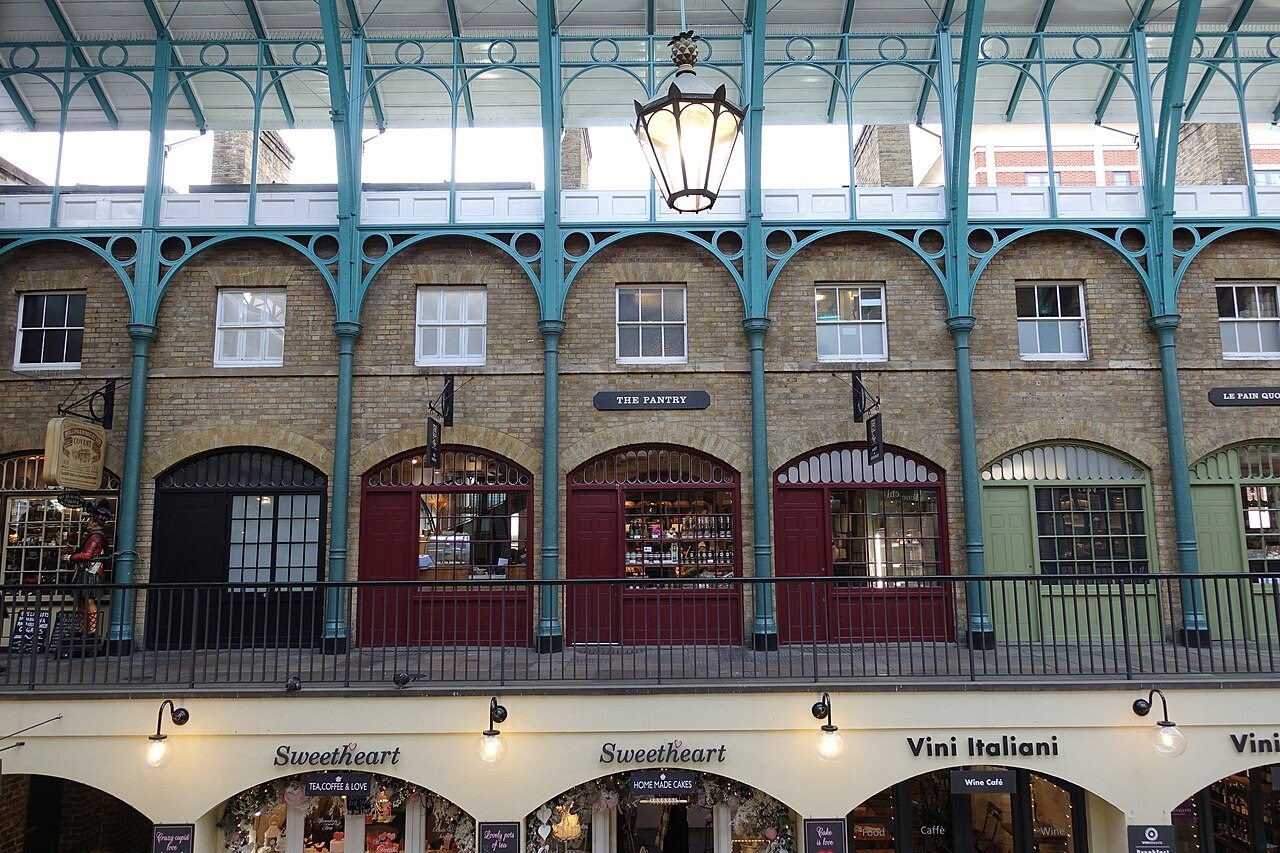
Featured photograph: Covent Garden market building and piazza. Photograph by CrisNYCa, 2018-02-02; CC BY-SA 4.0. Resized and recompressed; theme may crop for display. Archival photography does not establish current access or services.


